How the Disappearance of Third Places Is Changing City Life
As staying becomes expensive and encounters are arranged by platforms, urban spaces without a required purpose are shrinking.
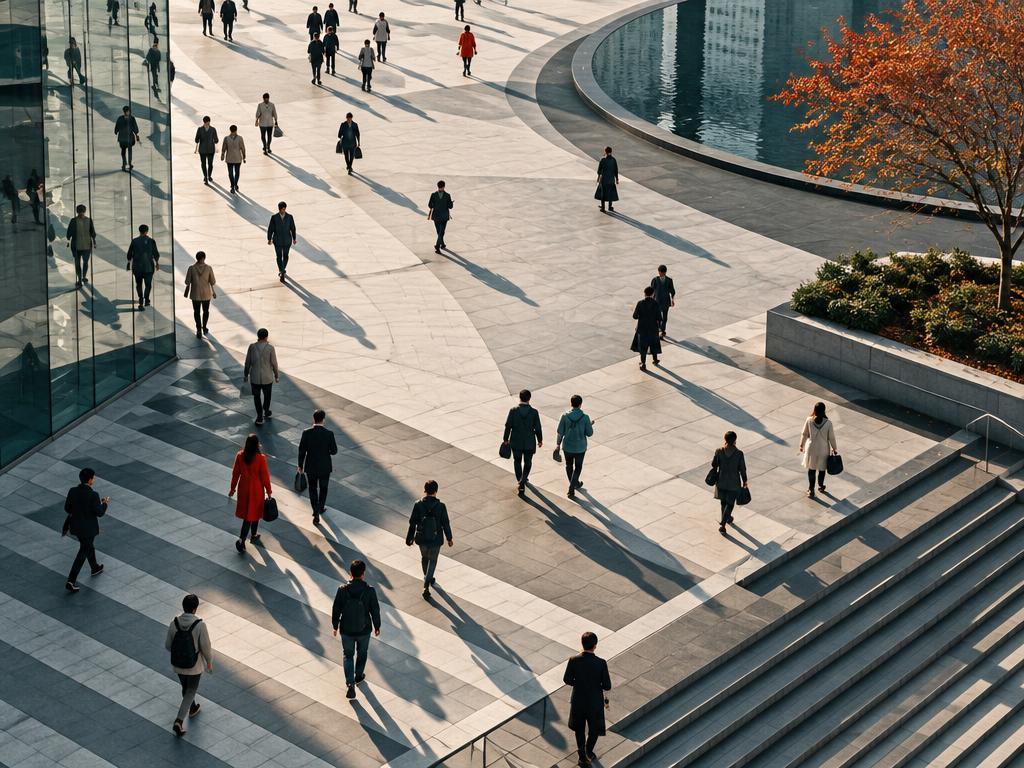
Beyond home and office, people once had many places where they could stay without a clear purpose. Bookshops, corner stores, neighborhood benches, and public corridors let strangers share a little time. These spaces have not vanished completely, but staying increasingly requires consumption or a reservation.
1. Why staying has become difficult
Urban space is pressed toward efficiency, with every square meter expected to produce measurable returns. Seat turnover, rent, and foot traffic are closely tracked, making purposeless presence appear wasteful.
Online services have also replaced many offline errands. The convenience is real, but the accidental encounters once attached to shopping, commuting, and public business have narrowed with them.
2. Relationships need low-pressure containers
Intimate ties are not the whole of city life. Familiar faces, shopkeepers, and neighbors we occasionally greet form a loose but important support network.
A third place does not demand immediate closeness. Repeated presence, distance, and gradual familiarity give trust a chance to form naturally.
Good public space does not force people to know one another; it allows relationships to emerge over time.
3. Reinventing the nearby
Third places do not always require monumental construction. Longer library hours, corner seating, and ground-floor spaces friendly to children and older people can all make a neighborhood more usable.
A city should be measured not only by how quickly it gets people to destinations, but by whether it permits them to have none. Those seemingly inefficient pauses may be what keeps urban life resilient.